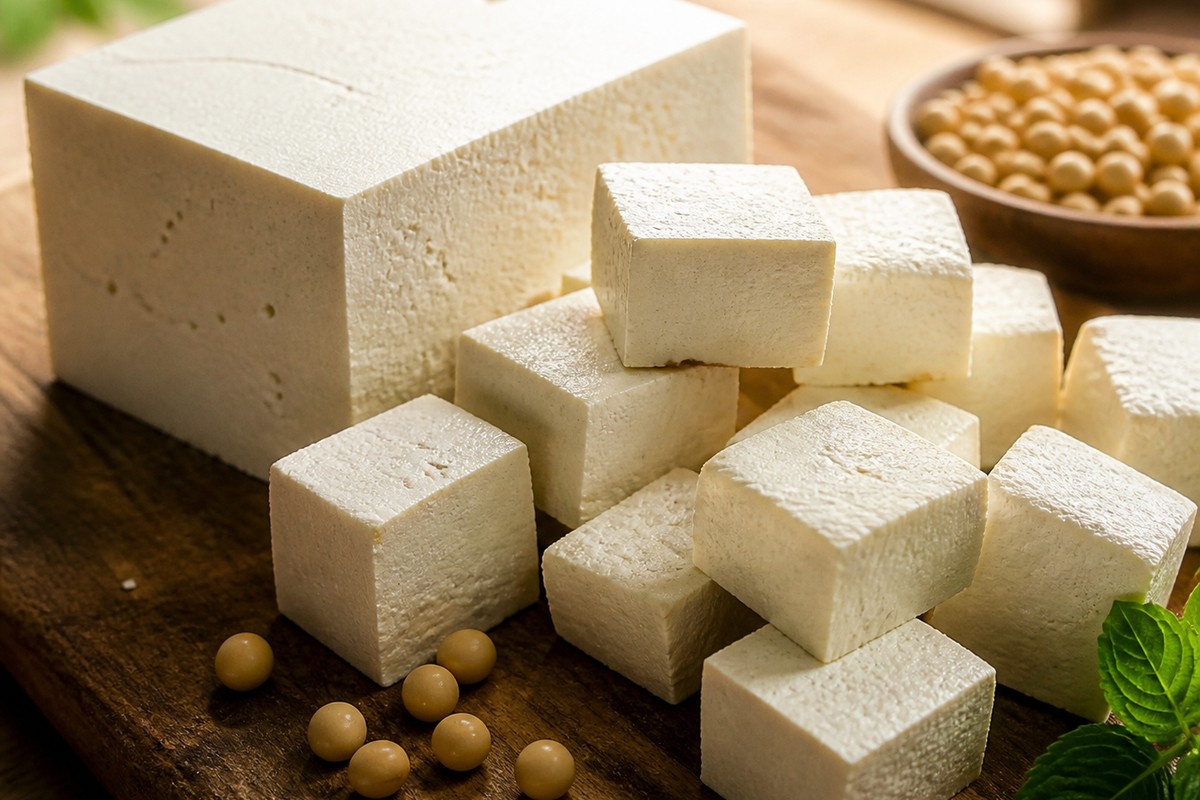
 ▲ Produced by curdling fresh soymilk and pressing the curds, firm tofu serves as an ideal zero-cholesterol, complete plant protein containing all nine essential amino acids alongside dense calcium reserves.
In the fields of preventive cardiology and nutritional biochemistry, tofu (bean curd) stands as one of the most rigorously investigated plant-derived functional foods.
Derived through the mineral coagulation of aqueous soybean extracts, tofu bypasses the digestive hurdles of raw legumes. Thermal processing and separation of indigestible fibrous hulls elevate its in vivo protein digestibility to over 95%, providing a bioavailability profile rivaling animal albumen without saturated lipid burdens.
Beyond delivering complete essential amino acids, tofu functions as nature’s densest nutritional vector of soy isoflavones (genistein and daidzein). These diphenolic compounds display selective estrogen receptor modulator (SERM) properties, attenuating osteoclastic bone resorption in estrogen-deficient postmenopausal states while protecting arterial endothelial architecture. Furthermore, the storage globulins glycinin and beta-conglycinin stimulate hepatic low-density lipoprotein (LDL) clearance through transcription factor modulation.
Drawing upon USDA FoodData Central reference values and contemporary randomized clinical trials, this monograph examines the quantitative molecular profile, metabolic benefits, and culinary physics of firm tofu.
1. Quantitative Nutritional Composition (Per 100g Firm Tofu, Prepared with Calcium Sulfate)
Firm tofu provides balanced macronutrient partitioning with elevated bioavailable calcium and zero dietary cholesterol.
| Nutrient | Amount (per 100g) | Daily Value (% DV) |
|---|---|---|
| Energy | 76 kcal | 3.8% |
| Water | 84.60 g | Special classification¹ |
| Protein | 8.08 g | 16.2% |
| - Leucine (BCAA) | 0.65 g | Daily value not established |
| - Arginine | 0.64 g | Daily value not established |
| Total Fat | 4.78 g | 6.1% |
| - Saturated Fat | 0.69 g | 3.5% |
| - Monounsaturated Fat (MUFA) | 1.05 g | Daily value not established |
| - Polyunsaturated Fat (PUFA) | 2.70 g | Daily value not established |
| - Cholesterol | 0.00 mg | 0.0% |
| Carbohydrates | 1.87 g | 0.7% |
| - Total Sugars | 0.50 g | 1.0% |
| - Dietary Fiber | 0.30 g | 1.1% |
| Calcium (Ca) | 350.00 mg | 26.9% |
| Iron (Fe) | 5.36 mg | 29.8% |
| Magnesium (Mg) | 58.00 mg | 13.8% |
| Phosphorus (P) | 121.00 mg | 9.7% |
| Potassium (K) | 121.00 mg | 2.6% |
| Zinc (Zn) | 0.80 mg | 7.3% |
| Total Isoflavones (Aglycone equivalents) | 23.50 mg | Daily value not established |
| Soyasaponins | ~65.00 mg | Daily value not established |
※ Source: USDA FoodData Central Standard Reference (Firm Tofu prepared with calcium sulfate).
¹ Water constitutes the biological hydration matrix rather than a regulated dietary intake value.
※ ‘Daily value not established’ applies to functional bioactive lipids, amino acids, and polyphenols devoid of formal statutory DRI percentage baselines.
2. Four Clinically Validated Biological Benefits
① Hepatic SREBP-2 Activation and Serum LDL-C Reduction
Soy storage globulins, particularly the 7S (beta-conglycinin) and 11S (glycinin) fractions, disrupt intestinal micellar cholesterol solubilization, enhancing fecal neutral sterol excretion. Concurrently, these biopeptides upregulate sterol regulatory element-binding protein 2 (SREBP-2) in hepatocytes, increasing cell-surface LDL-receptor (LDL-R) transcription. This accelerates systemic clearance of circulating atherogenic apolipoprotein B-100 particles.
② Selective Estrogen Receptor Modulation (SERM) and Skeletal Preservation
The primary soy isoflavone genistein exhibits high-affinity binding to Estrogen Receptor beta (ER-β). In postmenopausal physiology characterized by ovarian hypoestrogenism, genistein downregulates receptor activator of nuclear factor-kappa B ligand (RANKL), suppressing excessive osteoclastic bone demineralization while stimulating osteoblastic alkaline phosphatase synthesis.
③ Non-Dairy Calcium Bioavailability and Skeletal Mineralization
When coagulated using food-grade calcium sulfate, 100 grams of firm tofu supplies up to 350 mg of elemental calcium. Clinical isotopic tracer evaluations confirm that the fractional absorption rate of calcium from tofu (~31%) matches pasteurized bovine milk (~32%), providing an optimal non-dairy prophylactic intervention against osteopenia in lactose-intolerant cohorts.
④ Cytoprotective Saponins and Endothelial Nitric Oxide Synthesis
Tofu retains bioactive soyasaponins, amphiphilic triterpenoid glycosides that scavenge lipoperoxyl radicals within cellular membranes. Simultaneously, tofu’s high arginine-to-lysine ratio fuels the endothelial nitric oxide synthase (eNOS) enzymatic pathway, elevating vascular nitric oxide (NO) generation and reducing peripheral arterial resistance.
3. Optimizing Bioavailability and Culinary Physics
Gentle Blanching and Hydrothermal Activation
Firm tofu achieves maximal textural tenderness and protein digestibility when simmered for 90 to 120 seconds in lightly salted water. This osmotic pre-treatment expels residual bitter coagulant brine while gently hydrating internal soy globulin networks.
Co-Ingestion with Lipophilic Carotenoid Vegetables
Although low in saturated fats, tofu possesses an ideal polyunsaturated lipid emulsion matrix. Sautéing tofu alongside carotenoid-rich botanicals (such as carrots or tomatoes) enhances intestinal micellization and systemic absorption of lipophilic provitamin A and lycopene up to tenfold.
4. Potential Adverse Reactions and Considerations
Dietary Oxalate Management in Calcium-Oxalate Nephrolithiasis
Tofu contains moderate levels of soluble and insoluble plant oxalates derived from raw soybeans. Individuals with established idiopathic hyperoxaluria or recurrent calcium-oxalate kidney stone diatheses should consume tofu alongside ample hydration (minimum 2.5 L daily) and avoid combining it with concentrated spinach purees.
Goitrogenic Considerations in Severe Iodine Insufficiency
In vitro research suggests that supraphysiological concentrations of unfermented isoflavones may inhibit thyroid peroxidase (TPO) catalyzed iodination. In populations maintaining adequate dietary iodine (via seaweed, iodized salt, or seafood), standard tofu consumption does not impair thyroxine biosynthesis.
5. Synergistic Food Pairings for Maximum Nutrient Absorption
- Carrot: The polyunsaturated lipid emulsion in tofu accelerates the intestinal micellization and mucosal absorption of carrot-derived beta-carotene and falcarinol.
- Egg: Combining plant-based tofu with whole egg proteins creates a synergistic amino acid balance, bridging mutual limiting amino acids (methionine and lysine) to achieve a biological score of 100.
- Tomato: Natural malic and citric acids in tomatoes enhance gastric hydrochloric acid production, speeding peptic digestion of dense soy globulins while promoting lycopene bioavailability.
6. Frequently Asked Questions (FAQ)
Q1. Does daily tofu consumption cause feminization or gynecomastia in men?
A: No. Extensive clinical meta-analyses demonstrate that soy isoflavones do not alter bioavailable serum testosterone, free testosterone, or estrogen levels in men. Isoflavones possess weak, selective receptor affinities (1/1,000th of endogenous estradiol) and actually exhibit protective actions against benign prostatic hyperplasia.
Q2. How does firm tofu compare nutritionally to silken or soft tofu?
A: Firm tofu undergoes vigorous hydraulic pressing, discarding excess whey water. Consequently, firm tofu delivers nearly twice the protein, calcium, and iron density per 100 grams compared to high-moisture silken or soft tofu varieties.
Q3. Does freezing tofu truly alter its nutritional density?
A: Freezing does not synthesize new nutrients, but it physically transforms water into ice crystals, creating a porous sponge structure. Upon thawing and pressing, expelling this water condenses dry-matter nutrients, multiplying protein density per unit volume up to fivefold.